

Trump’s Climate ‘Con Job’ Comments Draw Mixed Australian Political Response



Today’s Article is brought to you by Empower your podcasting vision with a suite of creative solutions at your fingertips.
This piece is freely available to read. Become a paid subscriber today and help keep Mencari News financially afloat so that we can continue to pay our writers for their insight and expertise.
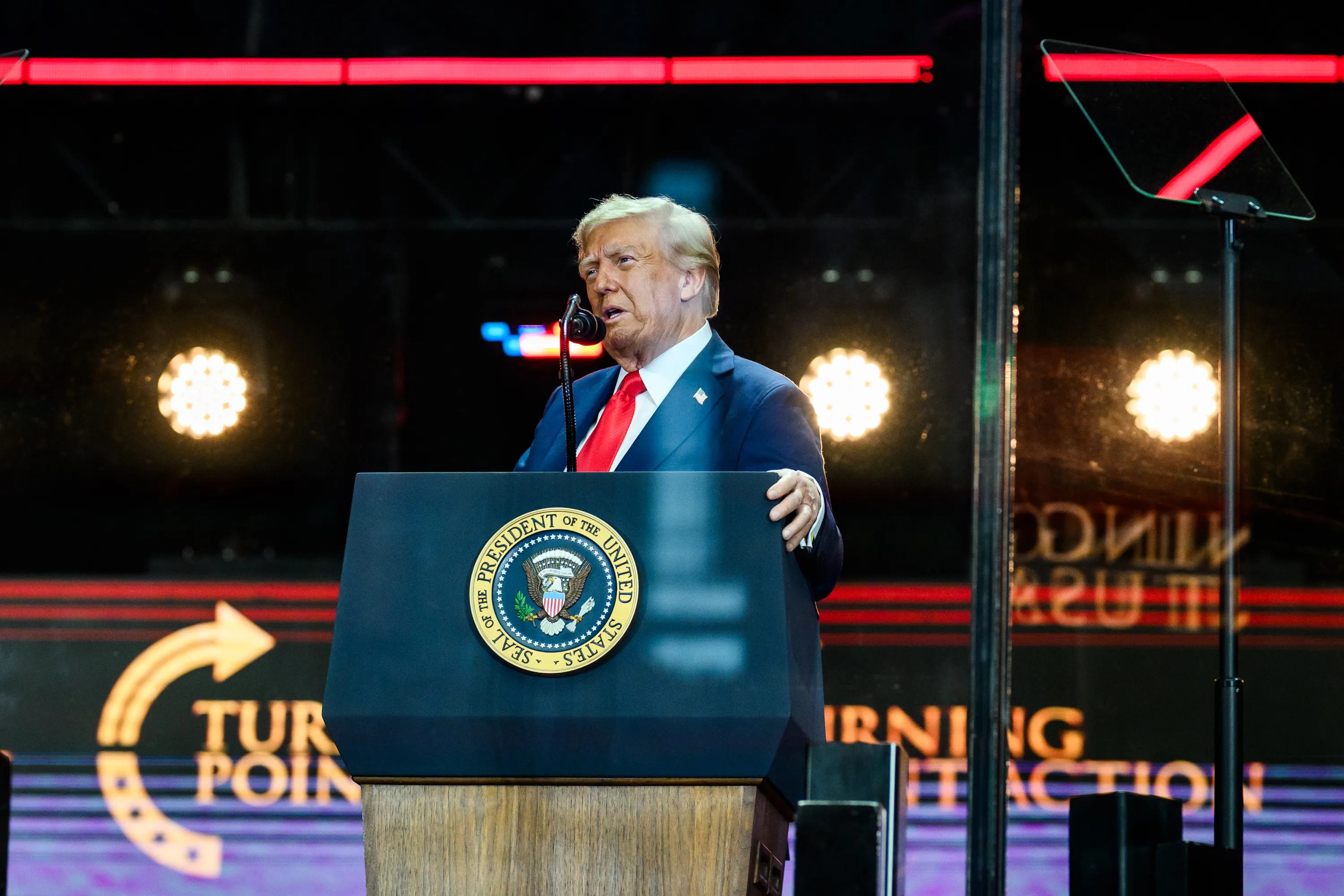
President Donald Trump’s declaration that climate change represents “the greatest con job ever perpetrated on the world” has prompted sharply different reactions from Australian politicians, highlighting potential tensions ahead of Prime Minister Anthony Albanese’s October 20 White House meeting.
Speaking at the United Nations General Assembly, Trump also described renewables as “an expensive job,” comments that Australian Treasurer Jim Chalmers diplomatically deflected during a Brisbane press conference Wednesday while former Deputy Prime Minister Michael McCormack offered qualified support for the U.S. president’s position.
“Donald Trump’s comments, President Trump’s comments are a matter for him. His views are a matter for him,” Chalmers told reporters. “Our job is to work through the Australian opportunity in an Australian way.”
The treasurer emphasized Australia’s commitment to clean energy investment despite Trump’s stark opposition to renewable energy policies, setting up a potential policy clash when Albanese meets with Trump at the White House next month.
Truth matters. Quality journalism costs.
Your subscription to Mencari directly funds the investigative reporting our democracy needs. For less than a coffee per week, you enable our journalists to uncover stories that powerful interests would rather keep hidden. There is no corporate influence involved. No compromises. Just honest journalism when we need it most.
Not ready to be paid subscribe, but appreciate the newsletter ? Grab us a beer or snag the exclusive ad spot at the top of next week's newsletter.
Australia Defends Clean Energy Investment
Chalmers used the press conference to reinforce Australia’s renewable energy strategy, arguing that international investors view the country as an increasingly attractive destination for clean energy investment.
“We see cleaner and cheaper energy as a massive economic opportunity for Australia,” Chalmers said. “And as big investors around the world are looking for the best place to invest in cleaner and cheaper energy, Australia is becoming a more and more appealing place, a more and more appealing destination for that investment capital.”
The treasurer cited global economic data to support Australia’s position, noting that net zero commitments cover more than 80% of global GDP and over 90% of Australia’s major trading partners.
“So this is a huge opportunity for Australia. We intend to grasp it, and we will do that by working through these issues in a considered and methodical way, informed by experts and by economic modelling,” Chalmers said.
The comments came as Chalmers released new renewable energy targets aimed at providing investor certainty, a move designed to attract international capital despite Trump’s opposing stance on climate policy.
Nationals MP Offers Cautious Climate Skepticism
Former Deputy Prime Minister Michael McCormack, speaking on the same Sky News program, expressed more sympathetic views toward Trump’s climate position while stopping short of full endorsement.
“Look, the climate’s been changing all along. I mean, it’s always changing. And we have to play our part. Yes, I admit that,” McCormack said. “And renewables in the right place at the right time can make a difference.”
However, McCormack criticized current renewable energy project implementations, particularly large-scale solar and wind developments in regional areas.
“But what we’re seeing at the moment is arable farmland being taken up and carpet bombed with battery energy storage systems,” he said. “The local volunteer firefighters say they won’t put out if they catch fire.”
McCormack also raised concerns about overseas investment in Australian renewable projects, citing a recent case involving a company operating insolvent in the United Kingdom for eight years while planning wind farm developments in New South Wales.
“They’re selling Australia out. That’s what’s happening. They’re absolutely selling Australia out,” McCormack said, referring to government efforts to attract international clean energy investment.
Policy Divergence Ahead of Trump Meeting
The contrasting Australian political responses highlight potential complications for Albanese’s upcoming White House visit, where climate policy differences may strain bilateral discussions already focused on defense cooperation and trade relationships.
Trump’s UN speech, which McCormack described as “blistering,” included sharp criticism of European climate policies and reiterated the president’s skepticism toward renewable energy initiatives.
McCormack praised Trump’s direct approach while acknowledging the scheduled October meeting between Australian and American leaders.
“Well, that’s encouraging. I’m glad the Prime Minister has gained a meeting. Finally, it’s taken more than 300 days, taken a lot longer than Malcolm Turnbull and Scott Morrison ever took to gain a meeting with the United States President,” he said.
Economic Context Amid Climate Debate
The climate policy discussion emerged during a broader economic update, with Chalmers announcing that underlying inflation had fallen to 2.6% in August, within the Reserve Bank’s target range.
“We also welcome today the news that underlying inflation in August fell once again. It is a very good thing to see underlying inflation down to 2.6% around the middle of the Reserve Bank’s target range,” Chalmers said.
The treasurer linked inflation progress to broader economic policy goals, including productivity improvements and regulatory reform initiatives announced Wednesday.
Chalmers revealed he had tasked the Board of Taxation with finding ways to reduce compliance costs and eliminate red tape in the tax system, describing the initiative as part of broader structural economic reforms.
“This is all about finding material and measurable ways to get compliance costs down to cut red tape in the tax system,” he said.
Regional Energy Project Concerns
McCormack’s criticism of renewable energy projects centered on rural community impacts and questions about overseas investment oversight.
He specifically referenced the halted wind farm project between Binalong and Bowning in New South Wales, where the international developer had reportedly operated insolvent in the United Kingdom.
“They were going to put 90 wind turbines, 90 towers, as high as Barangaroo 1, between those idyllic, peaceful villages in the Yas Valley,” McCormack said. “They’re already operating. They’re not paying their bills in the UK. The same situation would have happened in Australia.”
The former deputy prime minister also criticized Energy Minister Chris Bowen’s current U.S. visit seeking clean energy investment, arguing such efforts prioritize international capital over Australian community interests.
Diplomatic Balance Required
The climate policy divide presents challenges for Australian diplomacy as Albanese prepares for his first formal bilateral meeting with Trump since the president’s inauguration.
Chalmers emphasized Australia’s commitment to working with international partners while maintaining independent policy positions on climate and energy.
“Australia is working through this opportunity in a considered and methodical way, informed by experts and informed by economic modelling,” he said.
The treasurer avoided direct criticism of Trump’s climate positions while reinforcing Australia’s commitment to renewable energy development and international climate commitments.
McCormack acknowledged the importance of the upcoming Trump-Albanese meeting for broader bilateral relations, particularly regarding the AUKUS defense partnership and trade relationships.
“We are very much in lockstep in national security in many other areas with the United States, with the United Kingdom,” he said. “Of course, we’ve got that $368 billion AUKUS deal and that is crucial to Australia’s future security needs.”
The October 20 White House meeting will test whether climate policy differences complicate broader strategic and economic cooperation between the longtime allies, as both countries navigate global economic uncertainty and regional security challenges in the Indo-Pacific.
Sustaining Mencari Requires Your Support
Independent journalism costs money. Help us continue delivering in-depth investigations and unfiltered commentary on the world's real stories. Your financial contribution enables thorough investigative work and thoughtful analysis, all supported by a dedicated community committed to accuracy and transparency.
Subscribe today to unlock our full archive of investigative reporting and fearless analysis. Subscribing to independent media outlets represents more than just information consumption—it embodies a commitment to factual reporting.
As well as knowing you’re keeping Mencari (Australia) alive, you’ll also get:
Get breaking news AS IT HAPPENS - Gain instant access to our real-time coverage and analysis when major stories break, keeping you ahead of the curve
Unlock our COMPLETE content library - Enjoy unlimited access to every newsletter, podcast episode, and exclusive archive—all seamlessly available in your favorite podcast apps.
Join the conversation that matters - Be part of our vibrant community with full commenting privileges on all content, directly supporting The Evening Post (Australia)
Catch up on some of Mencari’s recent stories:


It only takes a minute to help us investigate fearlessly and expose lies and wrongdoing to hold power accountable. Thanks!