

NSW to Ban Mass Protests During Terror Threats — Civil Rights Groups Push Back


This piece is freely available to read. Become a paid subscriber today and help keep Mencari News financially afloat so that we can continue to pay our writers for their insight and expertise.
Today’s Article is brought to you by Empower your podcasting vision with a suite of creative solutions at your fingertips.
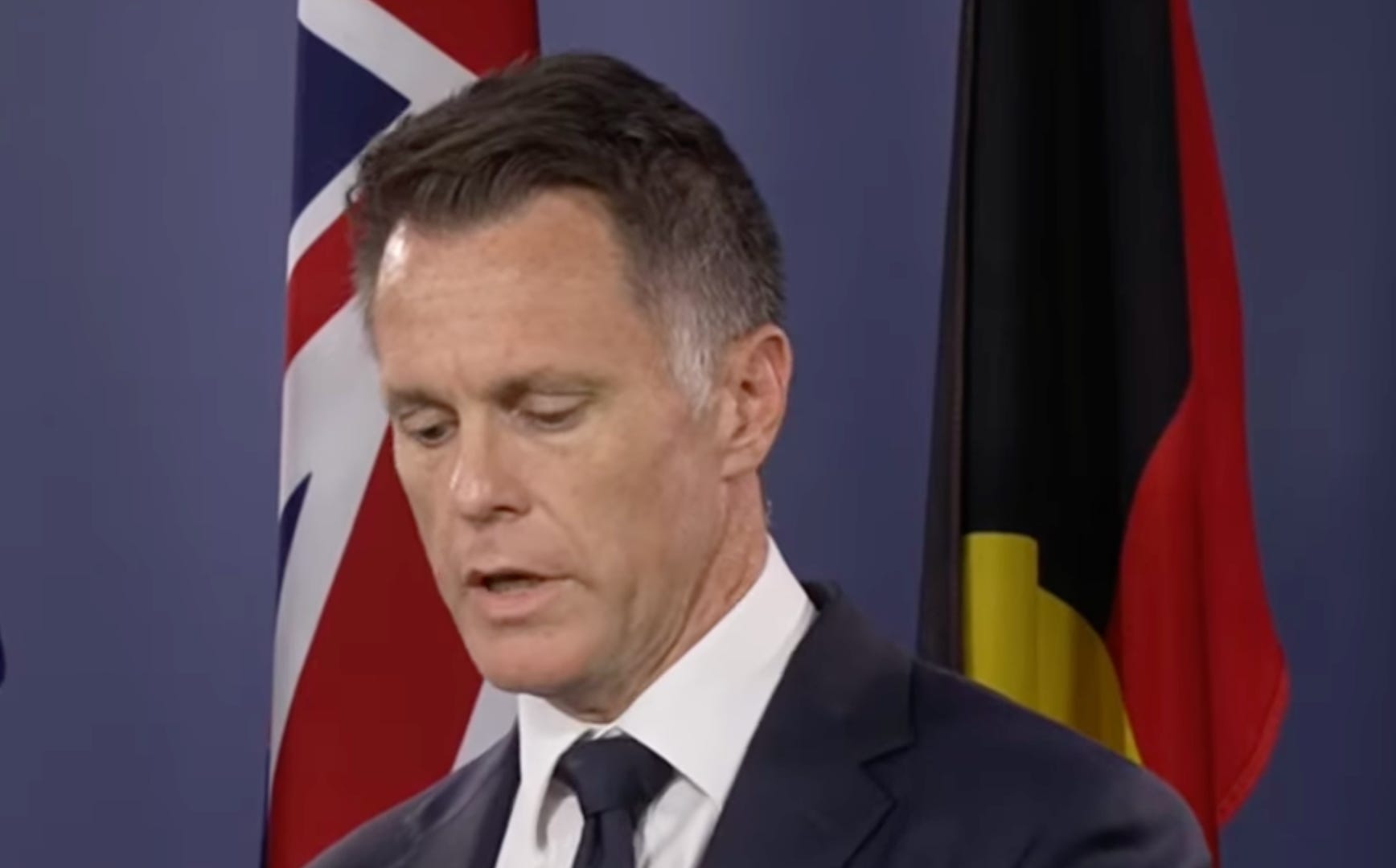
Your right to protest in Sydney could be suspended during terrorism alerts under emergency laws the NSW government plans to rush through Parliament next week — a move Premier Chris Minns says is necessary to prevent “combustible” situations but critics warn threatens democratic freedoms.
The New South Wales government will recall Parliament on December 22-23 to pass laws allowing police to reject protest applications during terrorism designations, Premier Chris Minns announced Wednesday at a press conference following the Bondi Beach attack that killed 15 people.
The proposed legislation would give NSW Police Commissioner Mal Lanyon authority to deny protest permits when a terrorism event has been declared, citing both police resource constraints and risks to “community harmony.”
“My worry is about what’s happening in Sydney right now,” Minns told reporters. “A mass demonstration in this combustible situation with our multicultural community could light a flame that would be impossible to extinguish.”
PressCon : Former Treasurer Holds PM "Personally Responsible" for 15 Deaths in Bondi Attack

Former Treasurer Josh Frydenberg called on the federal government to accept “personal responsibility” for the deadly Bondi attack that killed 15 people, including a 10-year-old girl, delivering an emotional speech demanding urgent action against extremism and antisemitism.
Speaking at what he described as both a memorial and a warning, Frydenberg characterized the attack as “the deadliest terrorist attack in Australia’s history” and “the greatest loss of Jewish life since October the 7th anywhere around the world outside the state of Israel.”
What Is a “Terrorism Designation”?
In New South Wales, when police and security agencies determine an attack meets the legal definition of terrorism, they can declare a formal terrorism event. This triggers specific emergency powers and investigative authorities. Under the proposed new laws, it would also automatically open a window where the police commissioner could refuse permits for public demonstrations.
The premier emphasized the ban would specifically target protests about “international events” — an apparent reference to demonstrations related to the Israel-Gaza conflict that have occurred regularly in Sydney since October 2023.
How It Started
The proposal comes four days after two gunmen opened fire on a Hanukkah celebration at Bondi Beach, killing rabbis, Holocaust survivors, and a 10-year-old girl in what authorities have labeled a terrorist attack inspired by ISIS ideology.
Minns said he’s concerned that protests during the current period could “rip apart our community” and force police to divert resources away from security operations and the ongoing investigation.
“I don’t want to be in a situation where a last-minute Supreme Court approval means that police have to divert resources away from community safety,” Minns said, referencing previous instances where protest organizers successfully challenged police rejections in court.
The Free Speech Debate
Civil liberties advocates have raised immediate concerns about the breadth of the proposed powers.
The legislation would remove existing legal pathways protesters currently use to challenge police rejections — specifically, appeals through the NSW Civil and Administrative Tribunal (NCAT). Under current law, when police deny a protest application, organizers can seek judicial review. The new law would eliminate that option during terrorism designations.
Legal experts note this creates a significant expansion of executive power, placing decisions about fundamental democratic rights solely in the hands of police leadership without independent oversight.
The premier has not specified how long a “terrorism designation” would last or what criteria would be used to end it, raising questions about whether protest bans could extend for weeks or months.
What Minns Says vs. What Others Fear
Minns framed the measure as temporary and targeted: “My responsibility right now is both community safety and community harmony.”
However, the lack of detail about duration, scope, and oversight mechanisms has prompted concerns from legal observers. There’s no clarity on whether the ban would apply to all protests or specifically those related to international conflicts, nor whether peaceful vigils or small gatherings would be affected.
Police Commissioner Lanyon, speaking alongside Minns, emphasized: “This is not a time for retribution. This is a time for calm, a time for respect and a time for peace.”
What Happens Next
Parliament will convene in emergency session on December 22-23, giving lawmakers just two days to debate and vote on the protest ban alongside sweeping gun control reforms.
The government has not yet released draft legislation, though Minns said it would be shared with the opposition “as soon as possible.” The premier indicated he hopes for bipartisan support, though opposition leaders have not yet publicly committed to backing the measure.
Legal challenges are likely if the law passes, with constitutional experts noting potential conflicts with implied freedoms of political communication recognized by Australian courts.
For young Australians who have participated in climate strikes, social justice marches, and political demonstrations throughout their lives, the proposal represents an unprecedented peacetime restriction on assembly rights in New South Wales.
The legislation will be debated alongside gun control measures, including caps on firearm ownership and removal of appeal pathways for license holders flagged as security risks.
Sustaining Mencari Requires Your Support
Independent journalism costs money. Help us continue delivering in-depth investigations and unfiltered commentary on the world's real stories. Your financial contribution enables thorough investigative work and thoughtful analysis, all supported by a dedicated community committed to accuracy and transparency.
Subscribe today to unlock our full archive of investigative reporting and fearless analysis. Subscribing to independent media outlets represents more than just information consumption—it embodies a commitment to factual reporting.
Not ready to be paid subscribe, but appreciate the newsletter ? Grab us a beer or snag the exclusive ad spot at the top of next week’s newsletter.