

Former Israeli PM Bennett Blasts Australian Government Over Bondi Massacre, Says 'Writing Was on the Wall'


This piece is freely available to read. Become a paid subscriber today and help keep Mencari News financially afloat so that we can continue to pay our writers for their insight and expertise.
Today’s Article is brought to you by Empower your podcasting vision with a suite of creative solutions at your fingertips.
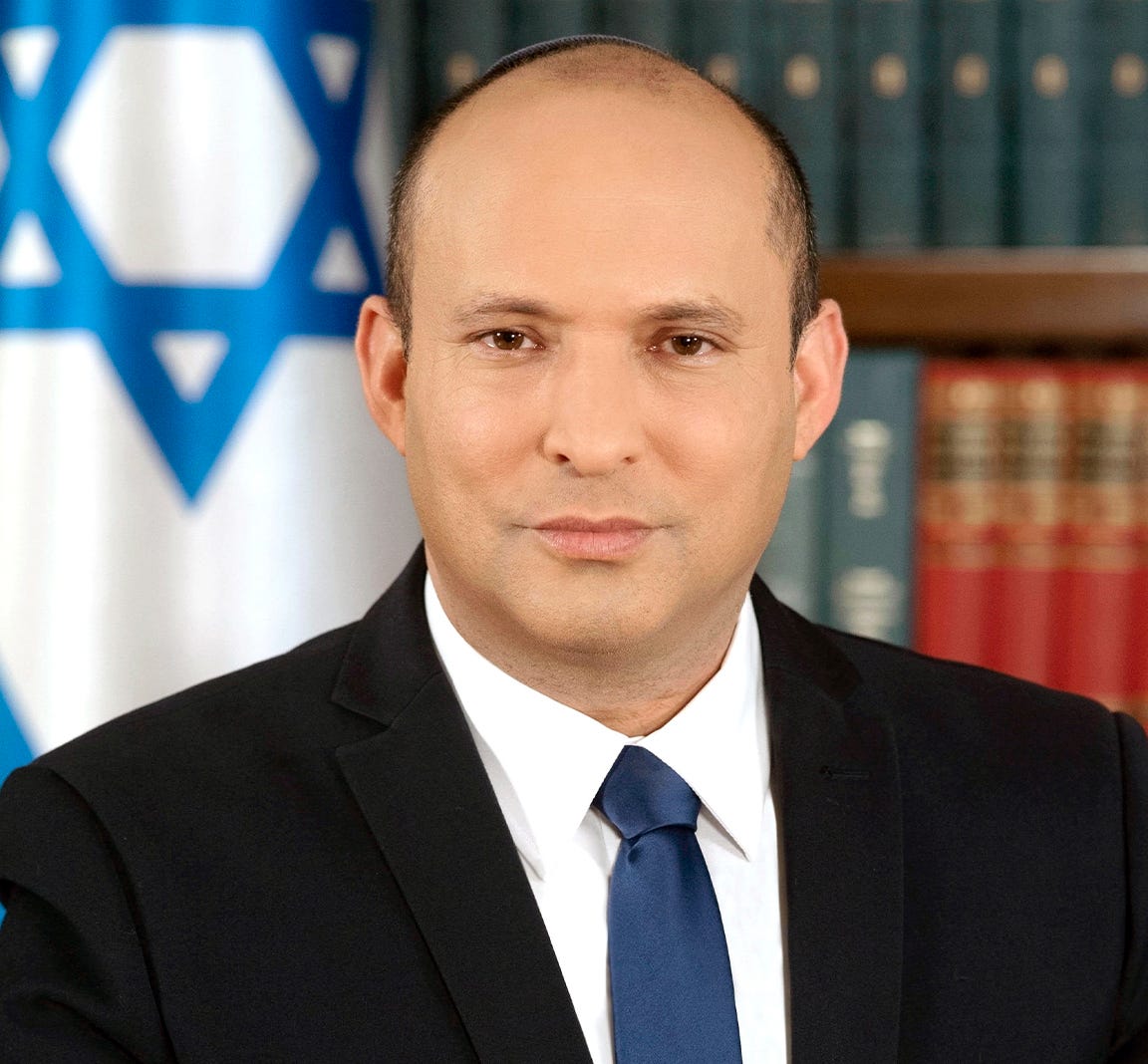
Former Israeli Prime Minister Naftali Bennett accused Australian federal and local governments of being “feeble” and “weak” in confronting rising antisemitism, saying authorities ignored repeated warnings that made Sunday’s deadly Bondi Beach massacre “inevitable.”
In a pointed interview with Sky News just hours after the attack, Bennett said he had spoken with several Jewish community leaders and the chief rabbi of Sydney’s Jewish community, who were “fearful and outraged” by the violence that killed nine people and wounded at least 12 others during a Hanukkah celebration.
“This is horrific. Our brothers and sisters were massacred at the Bondi Beach just because they’re Jews,” Bennett said. “There’s a huge wave of antisemitism in Australia. I just got off the phone with several Jewish community leaders and the rabbi of the Sydney Jewish community. Our hearts are broken, but I also have to say I’m angry.”
Bennett, who served as Israel’s prime minister from 2021 to 2022, said the tragedy was foreseeable and that Australian authorities had failed to act despite clear warning signs.
“I’m angry because we saw it coming. The writing was on the wall and the government, the Australian federal and local government was feeble, was weak, did not act against this huge wave of antisemitism, even though time and again they were urged to do so,” he said. “This is unacceptable.”
The former prime minister criticised what he characterised as a pattern of Australian officials downplaying antisemitic incidents by describing them as “community tensions,” which he said obscured the true nature of the threat facing Jewish Australians.
“They played down this wave of antisemitism calling it community tensions and all sorts of isms and words that their goal was to hide that there’s violent antisemitism,” Bennett said. “It’s not a two-sided situation. The Jews in Australia are attacking nobody, but the antisemites are attacking the Jews.”
He accused Australian leadership of creating a “false moral equivalence” that failed to distinguish between perpetrators and victims.
“The leadership, the government was creating this moral equivalent which is false, it’s not there,” Bennett said. “If you want to stop antisemitism, you want to stop terror, you need to be very clear about who are the terrorists, who is attacking, and to take action, not all sorts of plans that stay on pieces of paper.”
When asked what specific actions Australian leaders should take, Bennett called for a “full-fledged action plan” targeting antisemitic incitement and attacks on Jewish institutions.
“We want to see a full-fledged action plan being implemented against any sort of antisemitic incitement, any sort of attack on a Jewish synagogue or a Jewish coffee shop, and all of these things happened, and burning cars of Jews in Australia,” he said.
Bennett rejected the characterisation of tensions between Jewish and Muslim communities as a bilateral dispute, insisting the terminology itself served to minimise the threat.
“Don’t call it, I don’t accept that you call it community tension, and we don’t want to import community tension,” he said. “When people call for globalizing the intifada, this is what globalizing the intifada looks like.”
The former prime minister drew a direct connection between chants calling to “globalise the intifada” heard at protests worldwide and the violence that unfolded at Bondi Beach.
“When you call for globalizing the intifada, you’re globalizing terror and you’re importing it to everywhere, to New York, to London and, yes, to Sydney, Australia,” Bennett said. “We expect leadership to be strong, to be committed against antisemitism.”
Bennett compared Sunday’s attack to the October 7, 2023, massacre at the Nova music festival in southern Israel, where Hamas militants killed approximately 360 people attending a peace festival.
“The distance between the Nova Festival massacre and the Bondi Beach festival massacre is way shorter than one would expect,” he said. “It’s the same terrorists, the same incitement, the same drive, and I would also say the same weakness of response against these terrorists.”
He referenced longstanding friction between the Israeli and Australian governments, including an incident in which Australia’s Foreign Minister declined to visit sites of destruction in Israeli kibbutzim during an official visit.
“When political leadership accepts terror in Israel and sees it as a tension or a two-sided situation when it’s not, then immediately that sends a message in Australia, in Sydney, to the antisemites that this is the hunting season and you can go kill Jews,” Bennett said.
In a separate statement posted to social media, Bennett called the attack “a moment of grief, and time for accountability.”
“For months, they warned of rising antisemitism. The writing was on the wall. It was ignored. This violence did not come out of nowhere. When antisemitic hatred is tolerated and threats are downplayed, attacks become inevitable,” he wrote.
Bennett called on the federal government to take “immediate, decisive action to protect Jewish communities and confront antisemitism as the serious threat it is.”
“Statements of sympathy are no longer enough. Jews should not have to fear for their lives anywhere, including Australia,” he concluded.
Israeli Prime Minister Benjamin Netanyahu has previously expressed concerns about the treatment of Jewish Australians and the bilateral relationship between Australia and Israel. The diplomatic tensions have been widely reported in both countries.
Bennett concluded the interview by expressing solidarity with Australia’s Jewish community, particularly those in Sydney’s eastern suburbs.
“Our hearts and minds are with our friends in Australia and our brothers and sisters,” he said.
Sustaining Mencari Requires Your Support
Independent journalism costs money. Help us continue delivering in-depth investigations and unfiltered commentary on the world's real stories. Your financial contribution enables thorough investigative work and thoughtful analysis, all supported by a dedicated community committed to accuracy and transparency.
Subscribe today to unlock our full archive of investigative reporting and fearless analysis. Subscribing to independent media outlets represents more than just information consumption—it embodies a commitment to factual reporting.
Not ready to be paid subscribe, but appreciate the newsletter ? Grab us a beer or snag the exclusive ad spot at the top of next week’s newsletter.