

BREAKING: Bondi Shooters Trained at Philippines Military Camps — Foreign Minister Confirms International Investigation


This piece is freely available to read. Become a paid subscriber today and help keep Mencari News financially afloat so that we can continue to pay our writers for their insight and expertise.
Today’s Article is brought to you by Empower your podcasting vision with a suite of creative solutions at your fingertips.
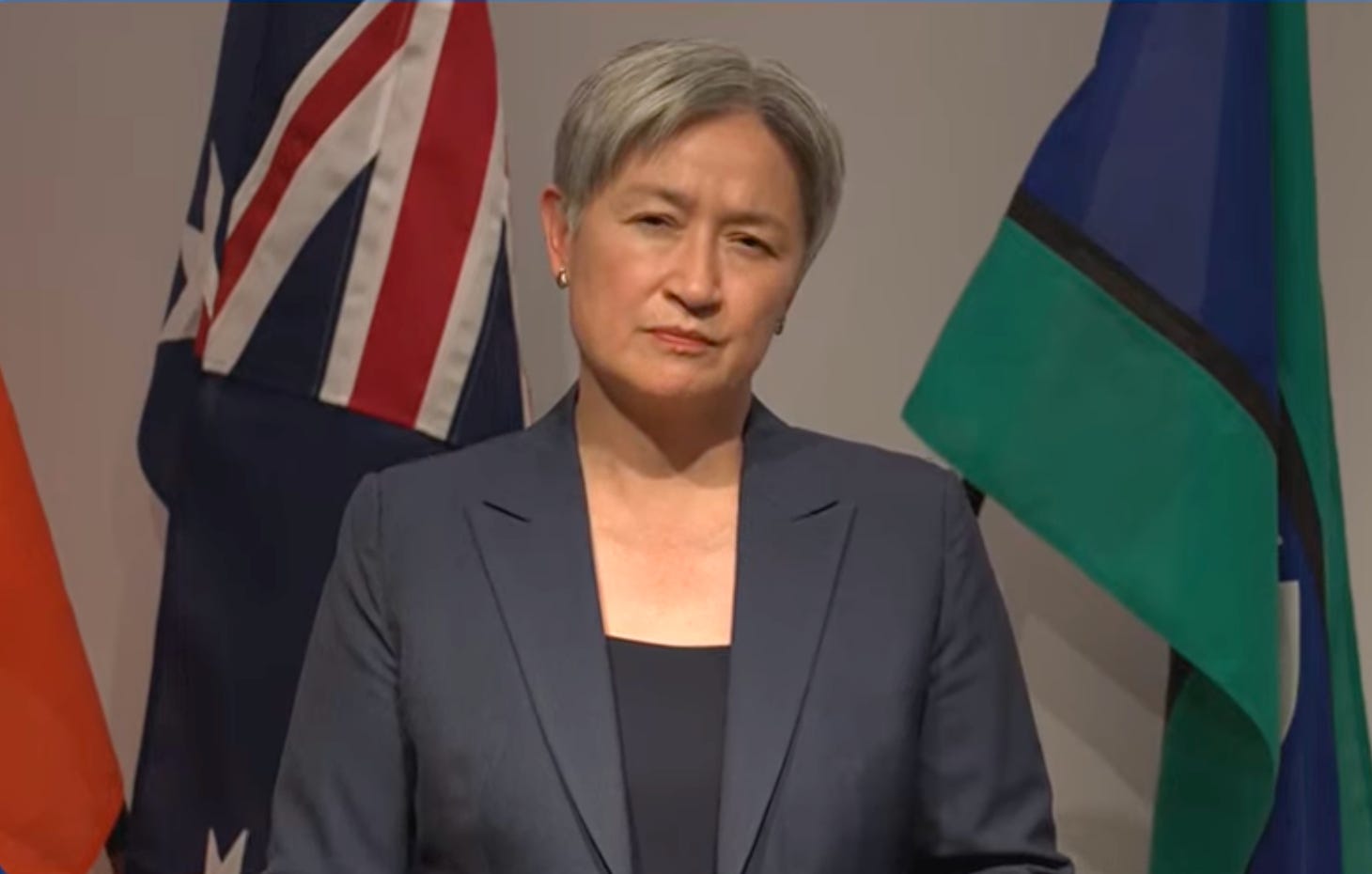
Both gunmen who killed 15 people at Bondi Beach traveled to the Philippines for military training at facilities linked to extremist groups, Foreign Affairs Minister Penny Wong confirmed Wednesday in ABC news Australia interview — an international dimension to the attack that raises urgent questions about how radicalized Australians are preparing for violence overseas.
PressCon : Former Treasurer Holds PM "Personally Responsible" for 15 Deaths in Bondi Attack

Former Treasurer Josh Frydenberg called on the federal government to accept “personal responsibility” for the deadly Bondi attack that killed 15 people, including a 10-year-old girl, delivering an emotional speech demanding urgent action against extremism and antisemitism.
Speaking at what he described as both a memorial and a warning, Frydenberg characterized the attack as “the deadliest terrorist attack in Australia’s history” and “the greatest loss of Jewish life since October the 7th anywhere around the world outside the state of Israel.”
When Foreign Affairs Minister Penny Wong spoke with her Philippines counterpart Tuesday, she wasn’t just exchanging diplomatic pleasantries. She was coordinating an investigation into how two Australian men traveled to the Philippines, received military-style training at facilities with extremist connections, returned to Sydney, and carried out the deadliest terrorist attack in Australian history.
NSW Police revealed Wednesday that Naveed Akram and his accomplice made the Philippines trip prior to Sunday’s Bondi Beach massacre. The details of that visit — where they went, who trained them, how long they stayed, what they learned — now form a critical part of the joint counter-terrorism investigation led by NSW Police with support from Australian Federal Police.
“We are working very closely,” Wong told ABC News Wednesday afternoon. “We have had a long history of security collaboration between Australia and the Filipino government and we will continue to do that.”
But the revelation raises an uncomfortable question: If these men traveled internationally for terror training, came back to Australia, and were known to intelligence agencies since 2019 as the AFP confirmed Wednesday — how did they slip through the net?
What We Know About the Training
NSW Police confirmed the Philippines visit but have released limited details given the ongoing investigation. What’s clear is both attackers traveled together to facilities described by police as providing “military training” — not recreational shooting, not cultural exchange, but tactical training at locations with known links to extremist organizations.
The Philippines has struggled for decades with insurgent groups in Mindanao and other southern regions. Some of these groups have pledged allegiance to ISIS. Others maintain training camps that have attracted foreign fighters seeking combat experience or tactical skills.
AFP Commissioner Reece Kershaw indicated Wednesday that the attack appears “inspired by ISIS” — the Islamic State terrorist organization that once controlled territory across Iraq and Syria and continues to inspire attacks globally despite losing its physical caliphate.
The connection between ISIS ideology, Philippines training camps, and the Bondi attack suggests a level of planning and preparation that goes beyond spontaneous radicalization online.
How International Terror Networks Actually Work
Here’s what matters for understanding this: Modern terrorism isn’t just about ideology or grievances. It requires capability — the knowledge and skills to carry out attacks effectively.
In the 2000s and 2010s, aspiring terrorists traveled to Syria, Iraq, or Afghanistan for training. Those pathways have become harder as those conflict zones intensified security and ISIS lost territory. The Philippines has emerged as an alternative destination — closer to Australia, easier to enter, and home to established camps where foreigners can train without immediately attracting counterterrorism attention.
Australian security agencies track travelers to high-risk regions. Citizens visiting Syria or Iraq trigger automatic security reviews. But the Philippines is a popular tourist destination and close Australian ally, making it harder to flag travel as suspicious without specific intelligence.
The question investigators now face: Did Australian agencies know about this training trip? If so, what assessment did they make about the threat these individuals posed upon return? If not, why not?
The Australia-Philippines Security Relationship
Wong emphasized Wednesday that cooperation between Australia and the Philippines on security matters has “a long history” and both governments are “very appreciative of all of the engagement from the government and also their agencies.”
That cooperation includes intelligence sharing, counter-terrorism operations, and joint training exercises. The two countries signed a Status of Visiting Forces Agreement in 2007 and regularly conduct military cooperation.
But here’s the complexity: The Philippines is a sovereign nation dealing with its own security challenges. It can’t monitor every foreign visitor who might attend an extremist training camp, especially in remote regions where government control is limited.
Australia’s security agencies must therefore identify travelers at risk of radicalization before they leave, monitor them while abroad, and assess their threat level upon return. That system appears to have failed in this case.
What Wong Said About Intelligence Failures
When directly asked Wednesday whether there had been “a failure of intelligence and security services” that allowed the pair to “slip under the radar,” Wong gave a careful answer:
“I’ve no doubt that the answers to those questions will form part of the response to this in the days and weeks to come.”
Translation: Yes, there will be a review of what intelligence existed, who knew what when, and why intervention didn’t happen. But that review must wait until the police investigation is complete.
“The first point though is we need the police investigation which is obviously led by New South Wales but is a joint investigation given that this is a terrorist event,” Wong said. “We need those investigations to be finalised.”
Why This Matters for Young Australians
If you’re planning to travel to Southeast Asia — whether for a gap year, volunteer work, or tourism — understand that your travel may be monitored if you visit regions with active insurgencies or extremist presence.
The Philippines is generally safe for tourists. But certain regions, particularly in Mindanao, remain under government travel warnings due to terrorism and kidnapping risks. If you travel to those areas, expect questions from Australian authorities upon your return.
This isn’t about preventing legitimate travel. It’s about the reality that Australian security agencies must now track citizens who may be seeking tactical training that could be used for violence at home.
The Bondi attack proves that the threat isn’t just “over there” in distant conflict zones. It’s Australians traveling abroad, training, returning, and attacking their own communities.
John Howard Weighs In on Wong’s Middle East Diplomacy
In a separate but related development, former Prime Minister John Howard criticized Wong personally Wednesday for not visiting parts of Israel most affected by Hamas’ October 7, 2023 assault.
Howard also called Australia’s decision to recognize a Palestinian state “premature” and “needlessly provocative” — a decision made earlier this year alongside similar moves by the UK, Canada, and France.
Wong responded that Australia was “motivated to make that step in order to contribute to peace in the Middle East” and noted Australia is now “one of 150 plus countries around the world that recognise Palestine.”
She declined to “get into a political debate with the former Prime Minister” given Jewish Australians had just died in a terrorist attack.
The exchange highlights ongoing political tensions over Middle East policy — tensions that some worry contributed to the environment in which Sunday’s attack occurred, though authorities have not drawn any direct causal link.
What Happens Next
The joint counter-terrorism investigation continues with support from Philippines authorities. Details about the training camp locations, duration of stay, and individuals the attackers met while in the Philippines will likely emerge as the investigation progresses.
Foreign Minister Wong indicated Australia will maintain close cooperation with Philippines security agencies, noting “we’re very appreciative of all of the engagement from the government and also their agencies.”
For the broader question of intelligence failures and whether the system for monitoring radicalized travelers needs reform, Wong said those answers will come “in the days and weeks to come” after the initial investigation concludes.
Sustaining Mencari Requires Your Support
Independent journalism costs money. Help us continue delivering in-depth investigations and unfiltered commentary on the world's real stories. Your financial contribution enables thorough investigative work and thoughtful analysis, all supported by a dedicated community committed to accuracy and transparency.
Subscribe today to unlock our full archive of investigative reporting and fearless analysis. Subscribing to independent media outlets represents more than just information consumption—it embodies a commitment to factual reporting.
Not ready to be paid subscribe, but appreciate the newsletter ? Grab us a beer or snag the exclusive ad spot at the top of next week’s newsletter.