

Australia's Healthcare Access Crisis Drives Shift to Commercial Outsourcing, Industry Leaders Say



This piece is freely available to read. Become a paid subscriber today and help keep Mencari News financially afloat so that we can continue to pay our writers for their insight and expertise.
Today’s article is brought to you by Empower your podcasting vision with a suite of creative solutions at your fingertips.
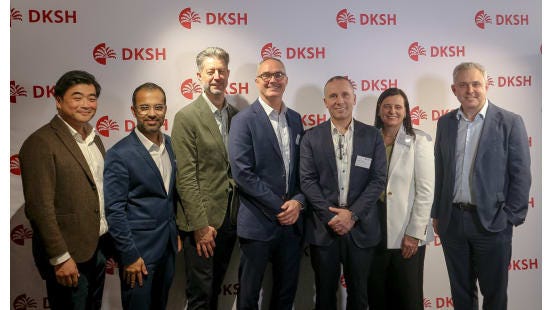
Senior executives from Takeda, Telix Pharmaceuticals, and DKSH Australia have called commercial outsourcing a board-level strategic priority for healthcare companies operating in Australia, warning that the country’s deteriorating medicine access timelines risk making it an afterthought for global pharmaceutical investment.
The warning came at a closed-door industry roundtable hosted by DKSH Australia in Sydney on July 2, where panelists assessed go-to-market trends across pharmaceuticals and radiopharmaceuticals in the Australian and New Zealand markets.
What Happened
DKSH Australia convened pharmaceutical and life sciences leaders to examine how commercial outsourcing is shifting from a back-office support function to a core market-entry strategy. Participating executives included David Henderson, Franchise Head Specialty, Oceania at Takeda, and Adrian Dunstan, Vice President APAC Sales and Marketing at Telix Pharmaceuticals, alongside Steven McBrien, General Manager Healthcare ANZ at DKSH.
The event drew on findings from Medicines Australia’s 2026 Access Denied report, which documented worsening reimbursement timelines and a growing gap between Australia’s medicine availability and that of comparable developed nations.
Why It Matters
The numbers behind the discussion are striking. Australians wait an average of 3.6 years for reimbursed access to first-in-class medicines following global registration, according to the Medicines Australia report. Australia has also launched roughly 25 percent fewer innovative medicines than comparable countries, despite ongoing investment in the sector.
For patients, those figures represent years of delayed access to potentially life-changing therapies. For pharmaceutical companies considering where to prioritize global launch sequences, they represent a market that demands high effort for uncertain return.
“Healthcare companies are facing longer and more expensive product launches, increasingly complex regulatory and reimbursement pathways, workforce shortages and growing pressure to deliver value,” McBrien said. “At the same time, Australia is often competing for investment and launch priority against larger global markets.”
DKSH’s own industry research reinforces why outsourcing has emerged as a practical response to these pressures: 90 percent of executives surveyed already outsource some part of their operations, and more than 60 percent increased outsourcing activity over the past three years.
Zoom Out
The DKSH roundtable reflects a broader structural realignment underway in how pharmaceutical companies think about market execution in smaller but regulated markets like Australia.
Historically, healthcare outsourcing largely confined itself to manufacturing, clinical trials, or distribution logistics — functions with clear operational scope. What is changing is the elevation of outsourcing into commercialization strategy: market access navigation, reimbursement submissions, regulatory engagement, and sales force deployment are increasingly being handled by specialist third parties rather than built in-house.
This shift is partly driven by the complexity of Australia’s Pharmaceutical Benefits Scheme reimbursement process, which requires specialized local expertise that many global companies either lack or find uneconomical to maintain permanently. It is also driven by workforce shortages that make building and retaining specialist teams difficult in a market that, while important, does not always command the headcount allocation of larger regions.
McBrien framed the strategic case directly: “The right outsourcing partner can help companies accelerate growth while maintaining compliance and controlling costs.”
The radiopharmaceuticals presence at the panel — through Telix Pharmaceuticals — signals that the outsourcing conversation is expanding beyond traditional small-molecule or biologics into emerging therapy categories with even more complex supply chains and regulatory requirements.
For global pharmaceutical companies weighing whether to self-fund a full Australian commercial operation or engage a specialist platform like DKSH, the calculation is increasingly tilting toward the latter. The alternative — deprioritizing the Australian market entirely — carries its own reputational and regulatory risks, particularly as the federal government continues to signal frustration with access timelines.
Bottom Line
Australia’s medicine access problem is real and worsening, and it is pushing the pharmaceutical industry toward a structural shift in how it commercializes products in this market. Commercial outsourcing is no longer a cost-cutting measure — it is becoming the primary mechanism by which companies can remain competitive in a market that is too complex to ignore and too demanding to staff conventionally. Whether that model closes the access gap for patients, or merely makes the current system more efficient, remains the more important question to watch.
Sustaining Mencari Requires Your Support
Independent journalism costs money. Help us continue delivering in-depth investigations and unfiltered commentary on the world's real stories. Your financial contribution enables thorough investigative work and thoughtful analysis, all supported by a dedicated community committed to accuracy and transparency.
Subscribe today to unlock our full archive of investigative reporting and fearless analysis. Subscribing to independent media outlets represents more than just information consumption—it embodies a commitment to factual reporting.
Not ready to be paid subscribe, but appreciate the newsletter ? Grab us a beer or snag the exclusive ad spot at the top of next week’s newsletter.