

Australia Grants Home Affairs Minister Expanded Powers to Deny Visas Over Hate Speech



This piece is freely available to read. Become a paid subscriber today and help keep Mencari News financially afloat so that we can continue to pay our writers for their insight and expertise.
Today’s Article is brought to you by Empower your podcasting vision with a suite of creative solutions at your fingertips.

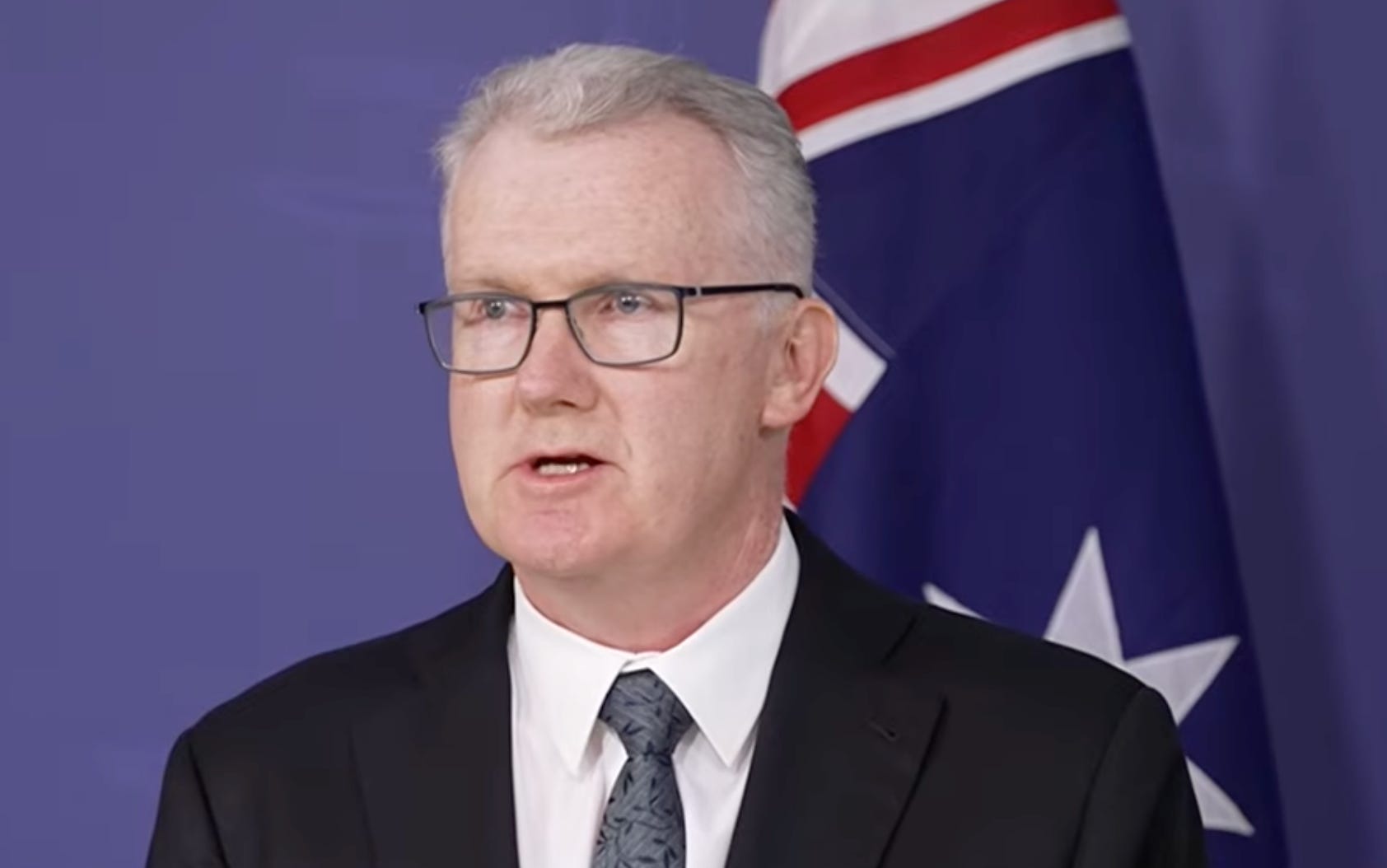
The Australian Government announced Thursday that Home Affairs Minister Tony Burke will receive expanded powers to cancel or reject visas for individuals who spread hate and division, marking a significant expansion of federal authority over immigration decisions in response to the Bondi Beach terrorist attack that killed 15 people.
The new visa powers, unveiled as part of a comprehensive package addressing anti-Semitism, will allow Burke to prevent entry to Australia for individuals deemed likely to promote hatred or division if allowed into the country. The measures also strengthen existing cancellation powers for those already in Australia engaging in such activities.
“The Minister for Home Affairs will also have new powers to cancel or reject visas for those who spread hate and division in this country, or would do so if they were allowed to come here,” Prime Minister [name not specified in sources] stated at a Thursday press conference alongside Special Envoy on Anti-Semitism Gillian Siegel and Australian Federal Police Commissioner Chrissie Barrett.
The announcement comes after Sunday’s ISIS-inspired attack at a Hanukkah celebration at Bondi Beach, where a father and son armed with high-powered rifles killed 15 people including 10-year-old Matilda. The massacre exposed what officials described as systemic failures to prevent radicalization and protect vulnerable communities despite two years of escalating anti-Semitic incidents.
Existing Powers Already in Use
Burke emphasized during Thursday’s announcement that he has already been exercising existing visa cancellation powers during his tenure as Home Affairs Minister, though he did not provide specific numbers or cases. The new measures would expand the scope and criteria for such decisions, potentially lowering thresholds for intervention.
“Tony Burke’s been keen to emphasise that he has already been using that to cancel some visas in his tenure as the Home Affairs Minister, but some new powers of some sort there,” according to reporting from the press conference. The exact parameters of the expanded authority remain unclear pending legislative drafting.
The visa powers form one component of five major legislative reforms announced by the National Security Committee. Other measures include aggravated hate speech offenses for preachers and leaders who promote violence, increased penalties for hate speech promoting violence, making hate an aggravating factor in sentencing for online threats and harassment, and developing a regime for listing organizations whose leaders engage in hate speech.
Complex Legislative Drafting Ahead
Burke characterized the legislative package as “quite complicated laws” that will require consultation with stakeholders and careful drafting to balance security concerns with civil liberties protections. The Home Affairs Minister must navigate complex legal questions about how to define “hate and division” in ways that withstand constitutional scrutiny while providing operational clarity for immigration officials.
The Prime Minister indicated openness to recalling Parliament over the summer break to pass urgent measures, though Parliament is currently scheduled to reconvene in the first week of February. The timeline suggests government recognition that public pressure for immediate action must be balanced against the need for legally sound legislation.
Questions remain about how immigration officials will assess whether visa applicants might spread hate if allowed to enter Australia, and what evidence thresholds will apply. The prospect of denying entry based on predicted future behavior raises civil liberties concerns that opposition parties and advocacy groups are likely to scrutinize heavily.
International Comparisons and Precedents
Australia is not the first nation to grant immigration authorities broad discretion over visa decisions based on character concerns or potential threats to social cohesion. The United Kingdom has barred entry to numerous individuals deemed likely to incite hatred, including religious preachers and political extremists from various ideological backgrounds.
Counter-terrorism expert Josh Roos referenced international examples during broadcast interviews, noting that “Manchester has just banned the very globalised Infantada as a case in point” and suggesting Australia should consider similar measures against organizations that spread hate while staying below thresholds for violent extremism charges.
However, the effectiveness of such visa restrictions remains debated. Critics argue that excluding individual preachers or activists does little to address radicalization occurring through online platforms accessible regardless of physical presence. Supporters contend that denying entry to high-profile hate figures prevents them from building in-person networks and lending credibility to extremist movements.
What Both Sides Agree On
Both government and opposition figures acknowledge that current visa assessment processes failed to prevent individuals with extremist connections from entering or remaining in Australia, though they differ on whether expanded ministerial discretion or clearer statutory criteria better addresses the problem.
Why This Matters to Gen Z and Gen Alpha
Visa powers that exclude people based on their speech or predicted behavior directly impact how Gen Z and Gen Alpha experience Australia’s multicultural identity and engagement with global ideas. For digital natives who consume content from international influencers, activists, and thinkers across borders, government decisions about who can physically enter the country shape which voices they can hear in person at universities, conferences, and public events. The expansion of ministerial discretion also sets precedents about how much power governments should have to determine which ideas are acceptable in public discourse—a question particularly relevant for generations navigating tensions between free expression and protecting vulnerable communities from hate speech. Young Australians concerned about government overreach may worry these powers could be weaponized against legitimate political dissent or used to exclude controversial but non-violent speakers. Conversely, students from minority communities experiencing campus harassment may view visa restrictions as necessary tools to prevent radicalization in educational spaces. Understanding how immigration policy intersects with speech regulation matters because it will define what kinds of international exchange and cultural dialogue are possible as Gen Z and Gen Alpha build careers in an interconnected world.
Implementation Questions and Oversight Concerns
The announcement provided few details about oversight mechanisms for the expanded visa powers. Questions include whether ministerial decisions will be subject to judicial review, what appeals processes will exist for rejected applicants, and how the government will ensure powers are applied consistently rather than arbitrarily.
Civil liberties organizations are likely to press for transparency requirements about how often the powers are used and against whom. The absence of clear oversight mechanisms could enable ministerial overreach or inconsistent application based on political considerations rather than genuine security threats.
Immigration lawyers note that visa decisions already grant ministers substantial discretionary authority under existing character test provisions. The expansion may simply codify practices that occur informally or provide explicit statutory backing for decisions previously made under general character grounds.
Relationship to Broader Anti-Semitism Package
The visa powers complement other elements of the government’s response to rising anti-Semitism. Special Envoy Gillian Siegel’s plan, adopted in full by the government Thursday, includes education reforms, online safety measures, and community security funding alongside legislative changes.
David Gonski will chair a 12-month education task force examining how to embed anti-Semitism education in the national curriculum. The eSafety Commissioner, Special Envoy, and Department of Communications will collaborate on online safety advice addressing anti-Semitism specifically.
The government also triggered disaster recovery funding arrangements for the first time in response to a terrorist attack, with the Commonwealth and New South Wales sharing financial burdens of recovery for victims, families, and impacted small businesses.
Next Steps and Legislative Timeline
Burke’s office will begin drafting the legislative package for parliamentary consideration. The complexity of defining “hate and division” in legally defensible terms suggests the process may take weeks or months despite political pressure for rapid action.
Opposition parties have indicated general support for strengthening measures against extremism but will scrutinize specific statutory language and oversight provisions. The legislative process will likely include public consultations with legal experts, civil liberties groups, and affected communities.
Counter-terrorism expert Josh Roos called for a Royal Commission to examine how Australia reached the point where such measures became necessary. “We can’t put band-aids on it and hope that this is going to go away,” Roos stated. “We have to unpack it and build an evidence base for further policy going forward.”
The effectiveness of visa powers in preventing radicalization-driven violence will depend on implementation details not yet available. Whether the measures represent meaningful security enhancements or primarily symbolic political responses remains to be determined through their application in practice.

Bias Explanation: Sources dominated by government officials (Prime Minister, Home Affairs Minister Tony Burke, Special Envoy Gillian Siegel) announcing policy with counter-terrorism expert Josh Roos providing supportive professional commentary on similar measures; article presents government initiative with limited critical analysis or opposing viewpoints from civil liberties advocates.
Bias comparisons derive from an AI-assisted evaluation of content sources and are protected by copyright held by Mencari News. Please share any feedback to newsdesk@readmencari.com
Sustaining Mencari Requires Your Support
Independent journalism costs money. Help us continue delivering in-depth investigations and unfiltered commentary on the world's real stories. Your financial contribution enables thorough investigative work and thoughtful analysis, all supported by a dedicated community committed to accuracy and transparency.
Subscribe today to unlock our full archive of investigative reporting and fearless analysis. Subscribing to independent media outlets represents more than just information consumption—it embodies a commitment to factual reporting.
Not ready to be paid subscribe, but appreciate the newsletter ? Grab us a beer or snag the exclusive ad spot at the top of next week’s newsletter.